
Sydney Coastal Gutters: Why Salt Air Eats Them Twice as Fast
The Smell of the Southerly Tells You Everything
Drive along Marine Parade in Maroubra on a Saturday afternoon when the southerly is up, and you can almost taste the salt on your lips. That same air is sitting on every gutter, fascia and downpipe along Sydney's coast right now.
It is quietly eating through metal that the original installer said would last twenty-five years. By year ten, most of those systems are weeping at the seams. By year fifteen, the downpipes have rusted through behind the brackets where nobody can see.
This is not a problem unique to absolute beachfront. Every Sydney suburb within roughly one kilometre of the ocean sits inside what the steel industry calls a severe marine environment. That includes most of the Eastern Suburbs, the entire Northern Beaches strip from Manly to Palm Beach, and the coastal edge of the Sutherland Shire.
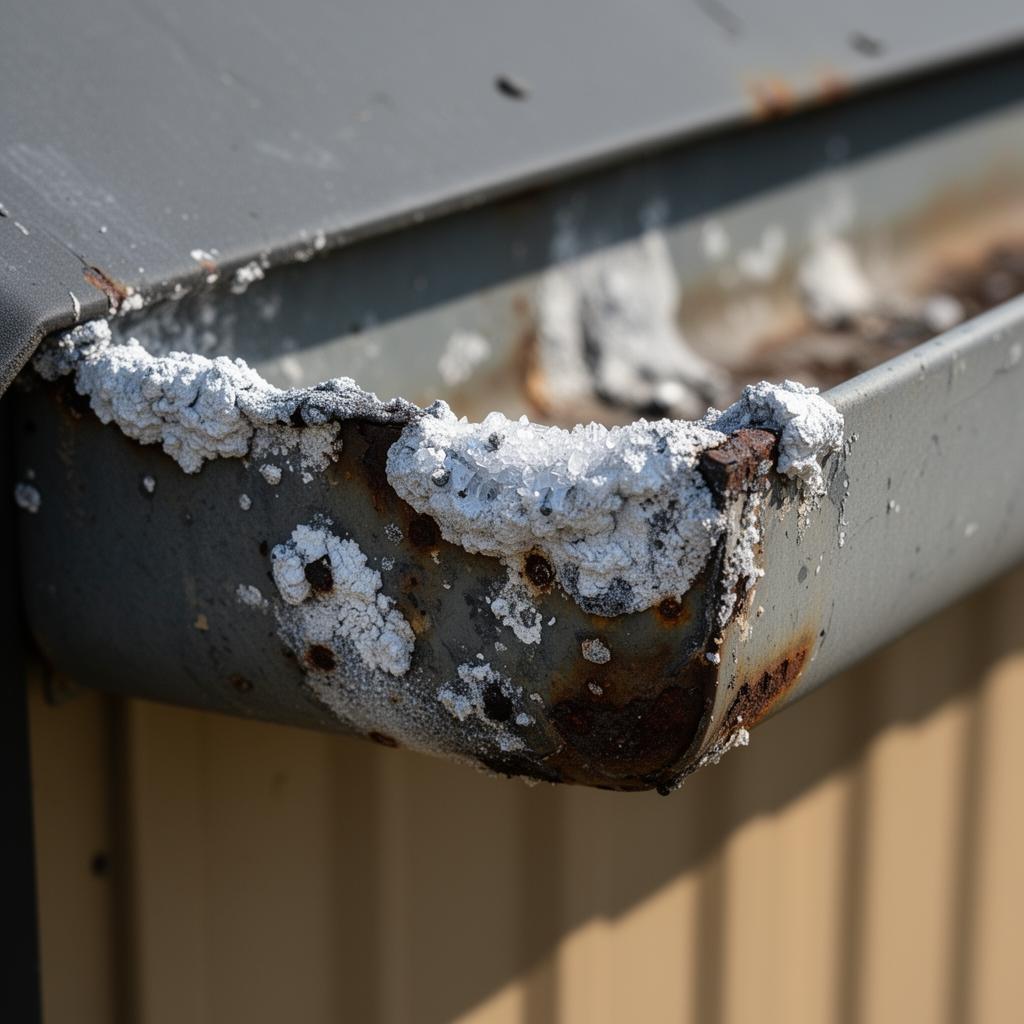
This guide explains why the corrosion runs so fast in Sydney, which materials genuinely survive it, and what to do if your gutters are already showing the white powder and rust spots that mean the clock is running out.
Why Sydney Salt Air Is Worse Than You Think
Sydney sits on the edge of the South Pacific with no landmass between us and Antarctica. When a southerly buster pushes up the coast in autumn and winter, it picks up microscopic salt droplets from the breaking surf and carries them inland for kilometres.
Researchers at the CSIRO have measured airborne salt deposition along the NSW coast at rates more than triple what inland Sydney experiences. Those salt particles land on your roof, settle inside your gutter channel, and stay there until rain washes them down the wall and into the soil.
Salt does two things to gutter metal that fresh water does not. It conducts electricity, which accelerates galvanic corrosion wherever two different metals touch. It also holds moisture against the surface for far longer than rain alone, which keeps the oxidation reaction running between storms.
The result is corrosion rates that the Australian Steel Institute classifies as Category C5, the second-highest severity band in the country. A standard galvanised gutter rated for moderate atmospheres will lose its protective coating roughly twice as fast at Bronte as it would at Parramatta.
The Five Suburbs Where We See the Worst Damage
Our crews replace more coastal gutters in these Sydney pockets than anywhere else. The pattern is consistent enough to predict.
- Maroubra, Coogee and Clovelly. Constant southerly exposure, very few wind breaks, and a lot of post-war fibro-and-tile homes still running on original galvanised gutters.
- Bondi and Tamarama. High density of renovated apartments where standard Colorbond was installed instead of the marine-grade specification.
- Manly, Freshwater and Curl Curl. Northern Beaches homes built between 1985 and 2005 with Zincalume gutters that are now well past their coastal lifespan.
- Palm Beach and Whale Beach. Premium homes where heritage box gutters have rusted from the inside out because nobody ever cleaned them.
- Cronulla and Bundeena. Sutherland Shire properties exposed to both ocean salt and bushfire-zone debris loading at the same time.
If your home sits in any of these areas, the question is not whether your gutters will fail early. It is whether you will catch it before water starts running down the inside of your wall cavity. A booked-in gutter cleaning is the simplest way to spot trouble before it spreads.
How to Read the Warning Signs on Your Own Roof
You do not need a ladder to spot the early stages of coastal corrosion. Most of the giveaways are visible from your driveway with a pair of cheap binoculars.
- White chalky deposits on the outside of the gutter. This is aluminium oxide leaching out of the paint system. It means the protective coating has started to break down.
- Brown streaking running down the wall below a downpipe joint. Rust-stained water is escaping from a pinhole or a failed seam.
- Sagging sections between brackets. Brackets corrode and lose their grip well before the gutter itself fails. The visual sag is your warning.
- Paint flaking off the fascia behind the gutter. Salt-laden water has been wicking back behind the gutter for a long time.
- Plants growing inside the gutter line. Salt accelerates the breakdown of organic debris into soil. Anything green up there means the channel has been holding water for months.
Any one of these signs on a coastal home is worth a closer look. Two or more, and you are usually past the point where cleaning will save the system. That is the point to book a proper gutter inspection or repair quote.
Galvanised, Zincalume, Colorbond and Aluminium: What Actually Survives
The single most important decision a coastal Sydney homeowner makes about gutters is the metal. The wrong choice locks in a replacement bill ten years from now.
Galvanised Steel
Galvanised gutters are zinc-coated mild steel. The zinc protects the steel underneath through a sacrificial reaction. In a coastal environment, that zinc layer disappears in roughly six to ten years, and once it is gone the steel rusts very quickly.
Galvanised is still installed on budget rebuilds and rental stock because it is cheap. On a beachfront home it is a false economy.
Zincalume
Zincalume uses a zinc-aluminium alloy coating that lasts longer than plain galvanised. In an inland Sydney suburb it can run for thirty years without trouble.
Within five hundred metres of the surf, expect closer to twelve to fifteen years before the coating starts to fail at cut edges and folded seams. The folded edges are always where it goes first.
Standard Colorbond
Colorbond is Zincalume with a baked paint system on top, manufactured by BlueScope Steel. The paint adds another layer of protection and a thirty-six-year warranty in benign environments.
The standard Colorbond warranty specifically excludes properties within one hundred metres of breaking surf, and reduces sharply between one hundred and one thousand metres. Most Sydney coastal homes fall inside that reduced-warranty zone.
Colorbond Ultra
Colorbond Ultra is the marine-grade specification, with a much heavier metallic coating designed for severe coastal exposure. It carries a warranty for properties within two hundred metres of breaking surf where standard Colorbond is excluded.
For any home east of the Old South Head Road ridge in the Eastern Suburbs, or anywhere on the ocean side of Pittwater Road on the Northern Beaches, Ultra is the only steel product worth specifying. The price difference over standard Colorbond is roughly fifteen percent. The lifespan difference is closer to double.
Aluminium
Aluminium gutters do not rust. They oxidise to a stable surface layer and then stop. For absolute beachfront homes where even Ultra struggles, marine-grade aluminium is genuinely a better long-term choice.
The catch is fixings. Aluminium expands and contracts more than steel, and it cannot share brackets with galvanised screws without setting up a galvanic reaction. A coastal aluminium installation has to be done by a fitter who understands isolation washers and stainless fasteners.
What a Proper Coastal Installation Looks Like
Material choice is half the battle. The other half is how the system goes together. Most premature coastal failures we attend are not the metal itself, they are the joints, brackets and downpipe connections.
A coastal-spec installation should include all of the following:
- Stainless steel rivets and screws at every joint and bracket. Standard zinc-plated fixings are the first thing to fail in salt air.
- Continuous-length runs wherever possible to reduce the number of joints. Every joint is a future leak point.
- Silicone sealant rated for marine exposure at all end caps and stop ends. Standard roof and gutter sealant is not the same product.
- Wider downpipes sized to clear coastal storm bursts quickly. Standard ninety millimetre round downpipes are undersized for the rainfall intensity we now see in Sydney during East Coast Lows.
- Leaf guard suited to local debris. Pine needles in Cronulla, Norfolk pine bracts in Manly, and tea-tree leaf in Palm Beach all behave differently. The right gutter guard installation for your suburb is not the same as the one used three suburbs inland.
If your installer cannot tell you which fixings they are using and why, get a second quote.
How Often Coastal Gutters Actually Need Cleaning
The standard advice of a clean every twelve months is written for inland suburbs. Coastal Sydney homes need a different schedule because salt-laden debris breaks down into a paste that holds moisture against the metal between rainfalls.
- Beachfront, less than two hundred metres from surf. Clean every four months. Inspect downpipes and end caps every clean.
- Two hundred metres to one kilometre from surf. Clean twice a year, ideally in early autumn and again in early spring.
- One to three kilometres from surf. Clean annually, but flush downpipes with fresh water at the same time to wash salt residue out of the system.
These intervals are tighter than the Australian standard cleaning frequency advice for inland homes, and for good reason. Salt does not give you the buffer that fresh water does.
What to Do If Your Gutters Are Already Failing
If you have white powder along the outside of your gutter, brown streaking down the wall, or visible rust spots from the ground, the system is already in its end-of-life phase. The questions to answer are how long you can stretch it, and what you replace it with.
Patch repairs make sense in three situations. If only one or two sections are affected and the rest of the run is sound. If the home is going on the market within twelve months and you need to pass a building inspection. If a single seam has failed during a storm and you need a temporary fix before a proper replacement.
Patching is a poor decision in three other situations. If multiple downpipes are failing at once, because the underlying coating has gone everywhere. If the brackets have rusted, because new gutter on bad brackets will sag in a year. If the home is more than fifteen years old and still on its original galvanised, because you are spending money on a system that was due for replacement anyway.
A full replacement on a typical Sydney coastal home runs between four and nine thousand dollars depending on length, height and access. Specifying Colorbond Ultra rather than standard Colorbond adds roughly six hundred dollars to a single-storey home. That is the cheapest insurance policy in roofing.
How Coastal Salt Affects Your Insurance Position
Most home insurance policies in NSW exclude damage caused by gradual deterioration, rust and corrosion. The Insurance Council of Australia general guidance is that wear and tear is the homeowner's responsibility, not the insurer's.
That matters at coastal properties because a storm event will often be the trigger that makes a corroded gutter finally fail. The insurer's assessor will look at the gutter, see the long-term salt damage, and class the loss as wear and tear rather than storm damage. The claim gets denied even though the storm was real.
Keeping documented maintenance records, including dated photos and itemised invoices for cleaning and inspections, is the single best protection against this outcome. We covered the full process in our Sydney storm insurance claim guide, and the same evidence rules apply with double force on the coast.
Coastal-Specific Tips for Each Sydney Region
Different parts of the Sydney coast have different problems. The fixes need to match.
Eastern Suburbs (Bondi, Bronte, Coogee, Maroubra). High density, lots of strata, lots of original Zincalume from the eighties and nineties. Replace at end of life with Colorbond Ultra and oversized downpipes to handle flash storms.
Lower North Shore coastal pockets (Mosman, Balmoral). Sheltered enough that Ultra is generally adequate, but watch for galvanic issues where new Colorbond meets older copper flashings. Our Mosman gutter team sees this almost every week.
Northern Beaches (Manly to Palm Beach). Tea-tree, Norfolk pine and banksia debris combined with high salt loading. Marine-grade aluminium becomes worth the premium north of Whale Beach.
Sutherland Shire (Cronulla, Kurnell, Bundeena). Add bushfire ember risk to the salt load. Specify both Ultra steel and ember-rated guard mesh in the same installation.
Frequently Asked Questions
How long should gutters last on a Sydney beachfront home? Standard Colorbond rarely makes it past twelve to fifteen years within a kilometre of the surf. Colorbond Ultra typically reaches twenty to twenty-five years. Marine-grade aluminium can run thirty years or more if installed correctly with isolated fixings.
Will rinsing my gutters with fresh water actually help? Yes, more than most people think. A fresh-water flush after every cleaning visit washes salt residue out of the channel and the downpipe, slowing the corrosion rate measurably. Our coastal gutter vacuuming service includes a flush as standard.
Is Colorbond Ultra worth the extra cost? On any property east of the coastal escarpment, yes. The price uplift over standard Colorbond is around fifteen percent. The lifespan uplift is around eighty to one hundred percent. No other building product on a Sydney home returns that ratio.
Can I install aluminium gutters myself? The metal is forgiving, but the fixings are not. Galvanic reactions between aluminium gutter and steel screws will eat the system from the bracket out within two years. If you are doing it yourself, every fixing in contact with the aluminium has to be stainless steel or properly isolated.
Does Sydney Water provide any rebate for coastal gutter upgrades? No direct rebate, but the Sydney Water rainwater tank guidance explains how a properly sized gutter and downpipe system feeds into a tank. Many coastal councils, including Northern Beaches and Randwick, offer rebates on the tank itself when it is connected to a code-compliant gutter run.
Booking the Right Job for Your Suburb
Coastal gutters are not a generic product. The right specification for a beachfront home in Coogee is different from the right specification for a home five hundred metres inland in Randwick, and different again from a Northern Beaches property exposed to a different wind direction.
Our team has been replacing coastal gutters across Sydney for more than a decade, and we specify Colorbond Ultra or marine-grade aluminium as standard on any property within the high-corrosion zone. We do not pretend a budget-grade product will give you twenty-five years on the beach.
If you are seeing the warning signs on your own roof, or you are buying a coastal home and want a pre-purchase opinion on the gutter system, request a quote online and we will get a technician on site within the week.
The salt does not stop. Your gutters need to be specified for the air they actually live in.
Need Your Gutters Cleaned?
GutterFlow Solutions provides fast, professional gutter cleaning across Sydney, Central Coast, Newcastle & the Hunter Region.